

What's replaced it isn't just new tools bolted onto old habits. It's a different industry. AI has absorbed most of the transactional workload - the sourcing, the screening, the first-pass matching. Margins are under pressure across the board, and the agencies feeling it hardest are the ones still running the old model with new software stapled on top. Headcount has stalled. The recruiters who remain are doing fewer, bigger, more strategic things - and doing them for customers who expect a lot more than a CV in an inbox.
What got you here won't get you there. Here's what will.
Run lean, on purpose
The instinct in a good year is to grow the team. The instinct that actually protects you in 2027 is to grow the output per person. Because when volume drops, a heavy headcount doesn't flex - it becomes the thing that sinks you. The agencies converting revenue into profit right now aren't the biggest. They're the leanest. Every hire earns their place, every process gets questioned, and nothing runs just because it's always run that way.
Treat AI as infrastructure, not a bolt-on
There's a difference between being AI-curious and being AI-first. Curious means you've tried a tool or two. First means the sourcing, the screening, the admin, the first-draft candidate summaries - all of it runs through AI as a matter of course, freeing you up for the parts of the job that actually need a human. If AI still feels like an add-on to your process rather than the backbone of it, you're not behind the curve. You're behind the market.
Own a niche instead of chasing everyone
Generalists get squeezed on price because they're interchangeable. Specialists get sought out because they're not. And this is where small, agile agencies genuinely have the advantage over the big players - you can go deep on a sector in a way a large generalist firm never will. Pick your patch. Know it better than anyone. Let that depth do the selling for you. Ince wide, mile deep, as it's known.
Sell like a consultant, not an order-taker
Nobody needs a recruiter to post a job anymore. Anyone can do that. What clients actually need - and what they'll pay properly for - is someone who reads a market accurately and tells them the truth even when it's not what they wanted to hear. That's the shift. From filling a vacancy to advising on a decision. The recruiters thriving in 2027 have made that move. The ones stuck as order-takers are the ones fighting hardest for margin.
Build a brand people trust before they ever call you
Trust used to get built on the call. Now it gets built before it. If a prospective client or candidate can't find anything you've said, written, or stood for, you're starting from zero every single time - and starting from zero is expensive. You don't need a huge audience. You need a consistent one. Say something worth reading often enough, and people arrive already halfway convinced.
Go deeper on relationships, because that's what's left
As AI takes the transactional layer off your plate, the human layer is the only thing left to differentiate on. Candidates don't remember how fast you sent a CV over. They remember whether you called back when you said you would, whether you told them the truth about a role, whether you actually listened. That's not soft. That's the entire value proposition now that speed is table stakes.
Know your numbers, not just your gut
Time to fill. Fall-off rate. Margin per placement. Source of best hires. These aren't back-office admin anymore - they're how the sharpest operators make decisions instead of guessing and hoping. Data doesn't replace instinct. It sharpens it. The recruiters flying blind on their own numbers are the ones most likely to be surprised by a bad quarter.
Diversify how you make money
A business built entirely on contingency fees is a business one bad quarter away from real trouble. Retained search, RPO, fractional offerings, advisory work - the agile agencies aren't betting everything on a single fee structure, and they're not scrambling every time the market tightens. Diversifying revenue isn't about chasing every opportunity going. It's about not being one client's decision away from a crisis.
Build actual resilience
The cycles are shorter. The pressure is higher. The market gives you less room to be wrong. And none of that gets easier just because you want it to. Resilience isn't a personality trait some people are lucky enough to have - it's built, deliberately, the same way you'd build a sales pipeline. The recruiters lasting through this are the ones who've done the work on themselves, not just on their CRM.
Stay agile, because standing still is the actual risk
What worked in 2020 didn't work in 2024. What's working now won't work in 2029. That's not a reason to panic - it's just the nature of the industry now. Agility isn't one tactic on a list. It's the mindset that makes every other point on this list possible. The recruiters who keep asking "what needs to change" will always outlast the ones who found something that worked once and never questioned it again.
If this resonates, there's a book in it...
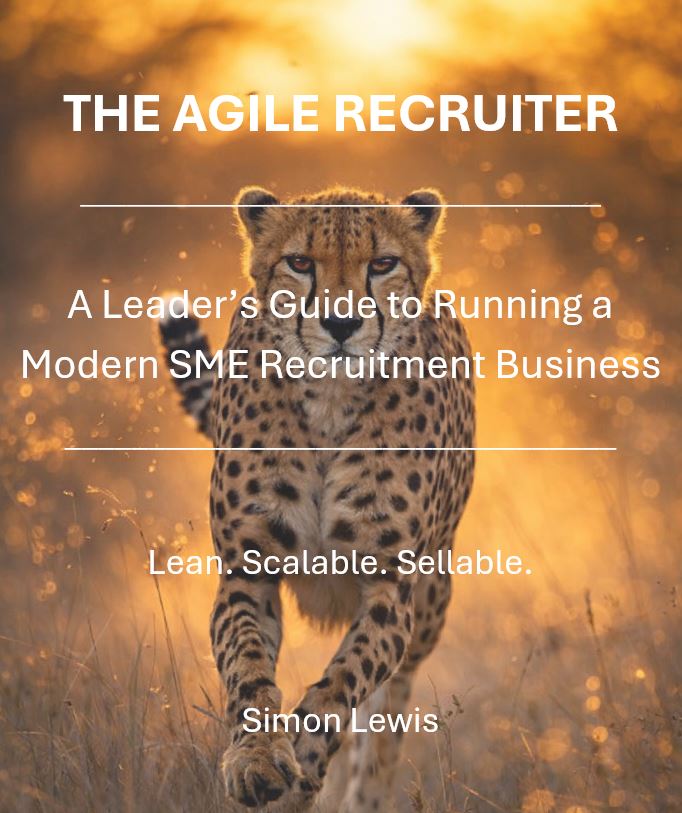
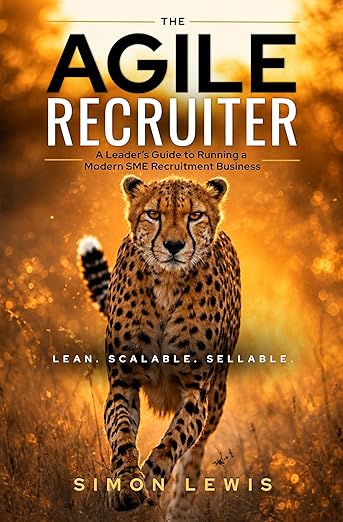
Everything above is the short version of an argument I made at much greater length in my first book, The Agile Recruiter: Lean. Scalable. Sellable. It goes deeper into exactly this: why the old model is breaking, what a genuinely agile agency looks like in practice, and how SME recruitment leaders can build something that doesn't just survive the next few years, but is actually built to be sold when the time's right.
If you're nodding along to any of the ten points above, the book is the next step. Buy it now on Amazon. It's only a tenner.